




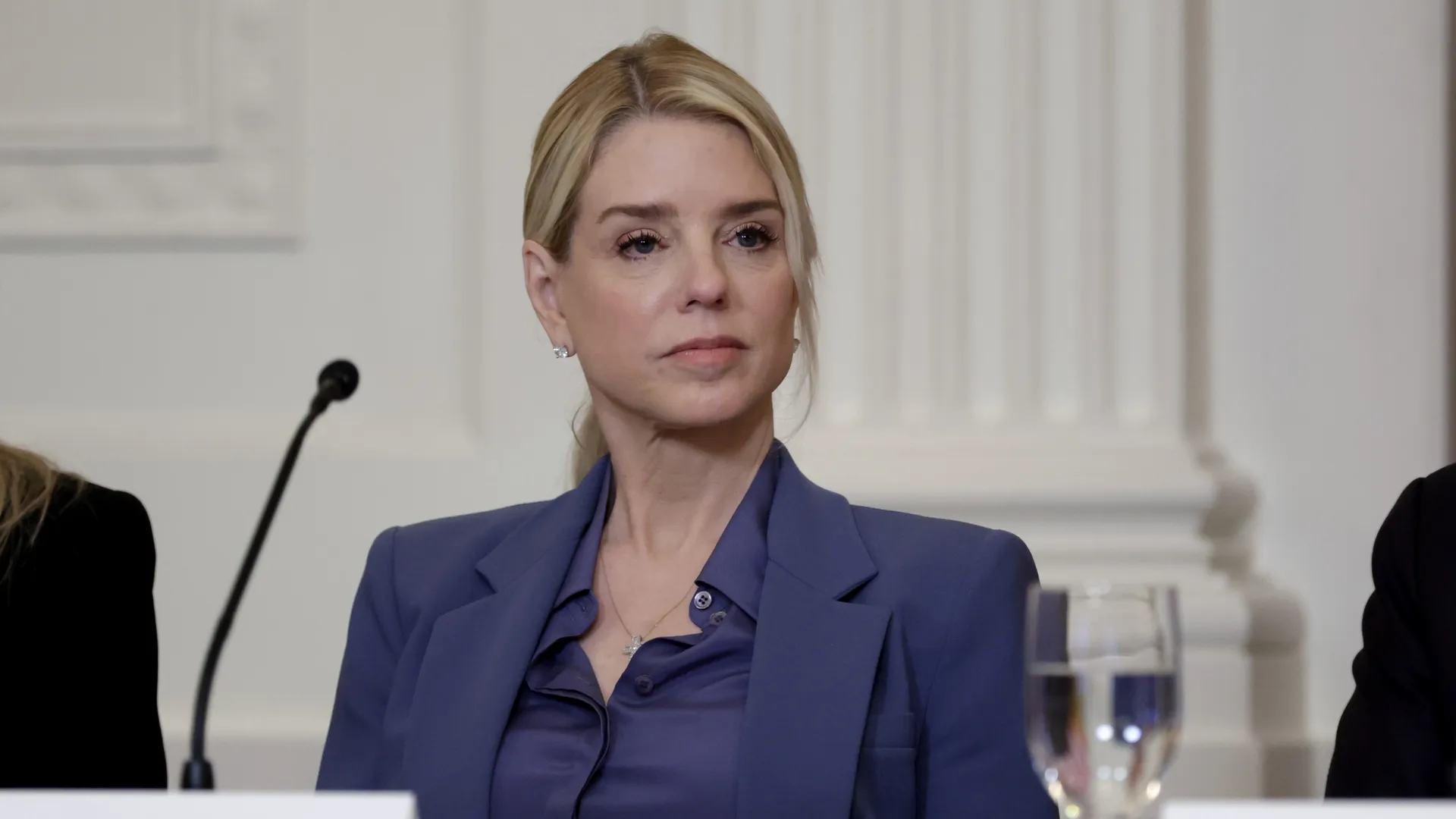
President Donald Trump is reportedly weighing whether to remove Attorney General Pam Bondi, a decision that would mark another major shakeup inside his administration and intensify scrutiny over the Justice Department’s handling of politically sensitive investigations.
Multiple outlets, including The New York Times, CNN, and Politico, reported that Trump has grown frustrated with Bondi’s leadership, particularly over the release of Jeffrey Epstein-related files and the pace of other high-profile investigations. According to those reports, Trump has discussed replacing Bondi with EPA Administrator Lee Zeldin, though no final decision has been publicly confirmed.
Why this matters
This is more than a personnel story. The attorney general sits at the center of the administration’s law enforcement agenda, and any move to replace Bondi would likely reshape the Justice Department’s priorities at a time when political pressure is already unusually high.
The reported tension comes as Bondi faces mounting attention over the Epstein files. Lawmakers have argued that while the Justice Department has released a large volume of records, key materials may still be missing. That issue has become a flashpoint not only for Congress but also for Trump allies who have demanded broader disclosure.
Politico reported that Bondi’s removal could be imminent, while other reports were more cautious, emphasizing that Trump has not yet made a final call. Trump publicly struck a more supportive tone in comments relayed to The New York Times, calling Bondi “a wonderful person” and saying she is doing “a good job.” That public praise, however, has not stopped speculation that internal frustrations are building.
The Epstein files remain central
The biggest political liability surrounding Bondi appears to be the administration’s handling of records tied to Jeffrey Epstein. The issue has remained politically potent because it blends public distrust, congressional oversight, and pressure from both media and activists for fuller transparency.
Bondi is scheduled to testify before the House Oversight Committee on April 14 regarding the matter, according to reporting from Straight Arrow News. Even the prospect of that testimony adds to the stakes. If Trump were to replace Bondi before or after that appearance, critics would likely frame the move either as a response to mismanagement or as an attempt to reset the narrative before further disclosures.
The broader backdrop is that public confidence in federal institutions has become deeply polarized. In that environment, the release of records is no longer just an administrative question; it is a test of credibility. Whoever leads the Justice Department next would inherit that burden immediately.
A wider pattern of cabinet instability
If Bondi were removed, it would fit into a broader pattern of turnover that has defined stretches of Trump’s political orbit. Recent reporting also points to a White House more willing than before to consider replacing cabinet officials when loyalty, pace, or public messaging no longer align with presidential expectations.
That matters because attorney general changes tend to send a stronger signal than most cabinet reshuffles. The Justice Department is expected to maintain institutional independence even while advancing the administration’s priorities. When a president appears dissatisfied with the speed or direction of investigations, that line comes under closer examination.
Critics have already argued that efforts to push investigations involving political opponents risk turning the department into a political instrument. Supporters counter that these inquiries are justified and overdue. Either way, the perception battle is now inseparable from the policy story.
What to watch next
The immediate questions are straightforward: Will Trump actually remove Bondi, and if so, who would replace her? But the larger issue is whether a leadership change would calm the political storm or deepen it.
If Lee Zeldin or another close Trump ally were tapped for the role, observers would likely focus on whether the appointment signals a harder-edged approach at the Justice Department. If Bondi remains in place, attention will shift to her congressional testimony and whether the administration releases additional Epstein-related materials.
For now, the story reflects a familiar dynamic in Washington: personnel decisions are often proxies for bigger fights over transparency, loyalty, and the use of executive power. In this case, the question is not only whether Bondi stays, but what her future says about how Trump wants the Justice Department to operate in the months ahead.
Sources: The New York Times; Politico; CNN; Straight Arrow News.