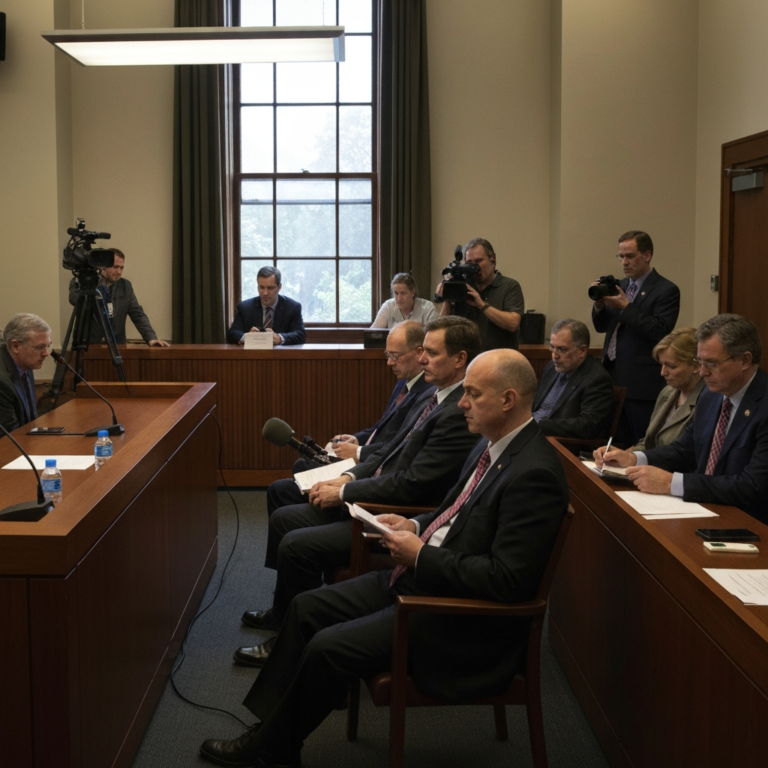




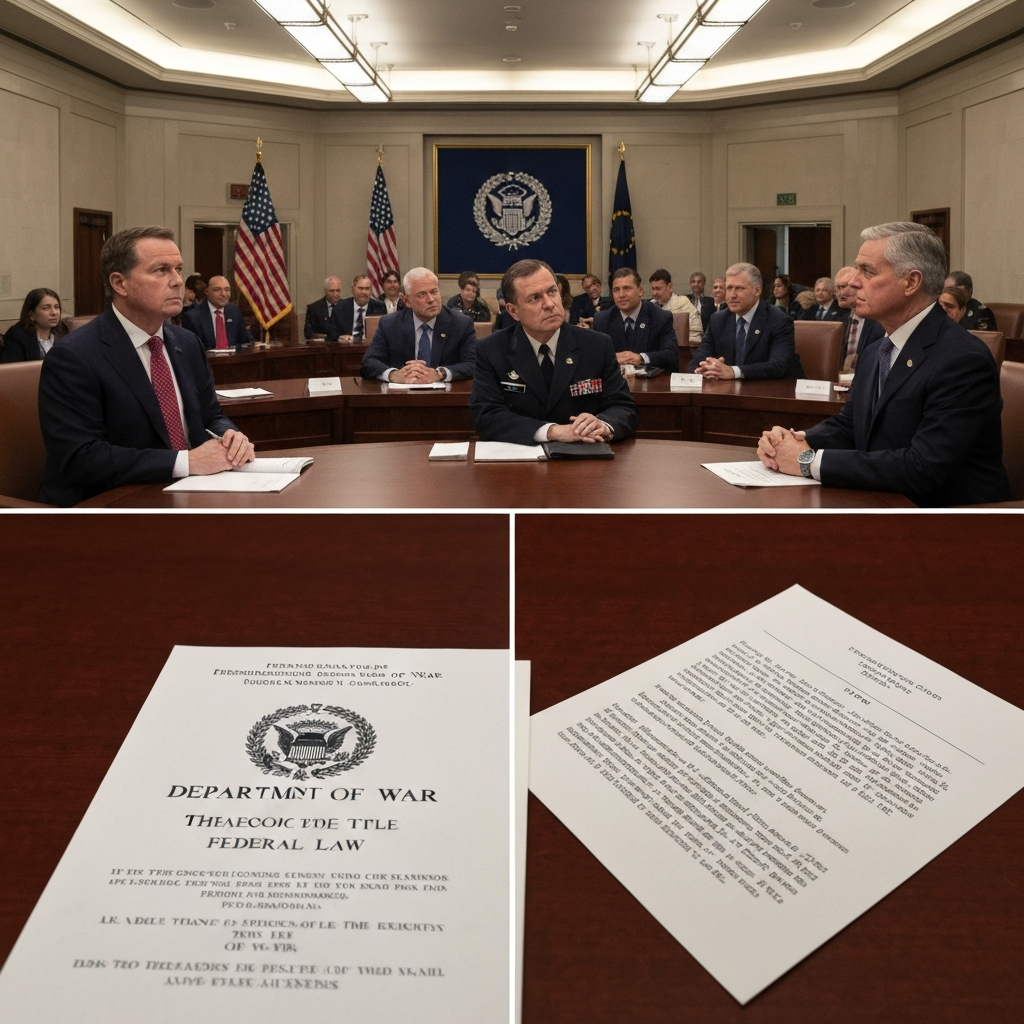
President Donald Trump’s executive order allowing “Department of War” as a secondary title has sparked a political and legal debate, but it has not changed the department’s official name under federal law. Unless Congress acts, the legal names remain the Department of Defense and Secretary of Defense.
Why this is a politics story
The issue is fundamentally about executive power, federal law, congressional authority and political messaging. The order affects how a major Cabinet department may be publicly branded, but it does not override statute. That puts the spotlight on the separation of powers: a president can shape executive branch communications, but only Congress can permanently rename the department in law.
What the order does — and does not do
According to the White House fact sheet and executive action, the administration authorized “Department of War” and “Secretary of War” for certain non-statutory uses, such as correspondence and ceremonial contexts. But the order explicitly leaves statutory references in place, meaning the legal framework still recognizes the Defense Department under its current name.
That distinction has become central to how newsrooms, analysts and lawmakers describe the move. In straight news coverage, many outlets continue using “Department of Defense” to avoid implying that the law has changed when it has not.
The cost and rollout questions
The debate is not only symbolic. A review from the Congressional Budget Office said a limited rollout could cost about $10 million in opportunity costs, while a broader rebrand could rise to $125 million. A full statutory rename across federal systems and documents could cost hundreds of millions, depending on scope and timing.
That cost discussion has fueled criticism from both parties. Some Republicans have argued that if the administration wants to emphasize military strength, resources should go toward readiness and procurement rather than branding. Some Democrats have dismissed the move as a distraction at a time when Congress faces broader national security and budget pressures.
Latest political context
The broader national conversation around defense branding comes as Washington remains focused on military posture, spending priorities and executive authority. Coverage from Politico and reporting tied to the White House rollout showed confusion inside official channels during the early implementation phase, including uneven digital branding and questions about whether agencies were prepared to execute the change consistently.
At the same time, the episode fits into a wider pattern in American politics: administrations increasingly use branding, symbolism and executive actions to signal priorities quickly, even when Congress has not enacted corresponding statutory changes. That gap between political messaging and legal reality is where much of the current controversy sits.
Why it matters
This story matters because it is about more than a name. It tests how far a president can go in reshaping the public identity of a federal institution without changing the law itself. It also raises practical questions about government spending, bureaucratic implementation and how the media should describe institutions when branding diverges from statute.
For now, the answer is straightforward: the “Department of War” label may appear in some approved contexts, but legally the department has not been renamed. Until Congress passes legislation, “Department of Defense” remains the official title.