



California’s long-running energy debate is back at the center of a much larger national argument — one that now spans fuel prices, domestic production, environmental policy and even military readiness.
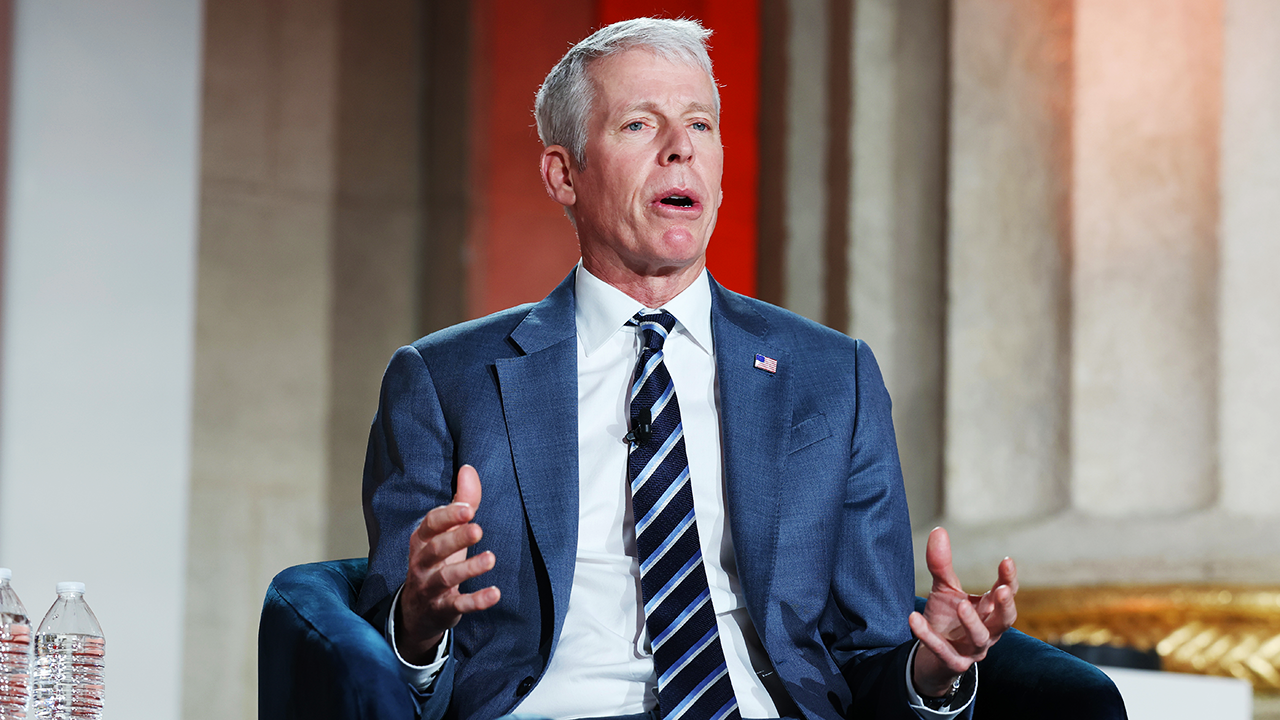
The immediate spark came from Energy Secretary Chris Wright, who argued that California’s declining in-state energy production and growing reliance on imported oil could create broader risks for both the state and the country. In comments reported by Fox Business, Wright said California has become too dependent on foreign crude despite having its own energy resources, framing the issue not just as an economic burden but as a national security concern.
That framing lands in an already heated political environment. California has some of the highest gasoline prices in the nation, and debates over refinery capacity, emissions rules, imported crude, and the transition away from fossil fuels have become a recurring flashpoint between state leaders and Washington. According to AAA, California regularly sits at or near the top of the national rankings for retail gasoline prices, reinforcing public frustration over energy affordability.
Why this is a political story first
Although the issue touches business and energy markets, this specific development is most appropriately categorized as Politics because the core conflict is between public officials over government policy. Wright’s remarks directly target the decisions of Gov. Gavin Newsom and California regulators, while Newsom’s office responded in openly political terms. The dispute is fundamentally about governance: who controls energy policy, how aggressively fossil fuel production should be limited, and whether state climate goals are helping or hurting residents.
The larger political context also matters. President Donald Trump has pushed for expanded domestic energy production and reduced reliance on foreign supplies, while California has positioned itself as a national leader in climate regulation, clean-energy mandates and stricter emissions standards. That makes the state a natural battleground in the wider ideological split between energy abundance and rapid decarbonization.
The wider national backdrop
This debate is unfolding as energy security has become more sensitive globally. Oil markets remain vulnerable to conflict, shipping disruptions and geopolitical shocks. The U.S. Energy Information Administration has repeatedly noted that crude prices and refinery dynamics strongly affect gasoline costs, especially in regions with tighter fuel specifications and limited refining flexibility such as the West Coast. The EIA’s market data and analysis can be found at EIA.gov.
California’s energy system is unusual by design. The state has pursued aggressive climate goals, including a target to phase out the sale of new gas-powered cars in the coming decades, while also maintaining specialized fuel standards intended to reduce emissions. Supporters say those policies are necessary to cut pollution and accelerate the clean-energy transition. Critics argue they have made the system more expensive, less flexible and more vulnerable when refinery outages or global supply disruptions occur.
The policy tension is not new. The Office of Governor Gavin Newsom has consistently defended California’s climate agenda as both environmentally necessary and economically forward-looking, arguing that the state is investing in cleaner technologies, grid modernization and long-term resilience. But opponents say the transition has not been managed in a way that protects consumers from immediate cost spikes.
What the latest reporting suggests
The newest coverage points to a simple but politically explosive question: can California reduce fossil fuel dependence without increasing vulnerability in the near term?
Wright’s argument is that the state has moved too far, too fast in constraining traditional energy production, effectively outsourcing drilling and imports to other countries instead of producing more at home. From that perspective, California is not eliminating fossil fuel use so much as changing where the fuel comes from — often at higher cost and with strategic downsides.
Environmental advocates and state officials see the issue differently. They argue California’s long-term answer is not to revive old oil models but to continue scaling renewables, electrification and efficiency. The California Energy Commission, which publishes data and policy updates on the state’s energy transition, maintains resources at energy.ca.gov.
In practical terms, both sides are talking past each other a bit. One side is emphasizing immediate reliability and affordability. The other is emphasizing long-term structural change. Voters, meanwhile, are left to deal with high bills in the present.
Why this matters beyond California
California’s influence extends far beyond its borders. As the largest state economy in the U.S., its regulatory choices often shape national markets, business strategies and political messaging. If California struggles to keep energy affordable while pursuing climate goals, opponents of similar policies in other states will seize on that as a warning. If it eventually proves the transition can work at scale, supporters will point to it as a national model.
That is why this story resonates well beyond local fuel prices. It has become a proxy battle over how America should balance environmental ambition with economic pressure and strategic independence.
The bottom line
The latest clash over California energy policy is not just about oil wells or gas stations. It is about competing visions of the country’s future. One vision prioritizes immediate domestic production and lower consumer costs. The other prioritizes aggressive climate action and a faster pivot away from fossil fuels. The political struggle comes from the fact that both sides claim to be defending the public interest — just on different timelines.
For now, the issue remains unresolved. Californians are still paying some of the highest energy costs in the country, state leaders remain committed to their climate course, and federal officials in the Trump administration are making the case that those choices carry national consequences. That guarantees this will remain a major political story in the months ahead.
Sources:
Fox Business
AAA Gas Prices
U.S. Energy Information Administration
Office of Governor Gavin Newsom
California Energy Commission