



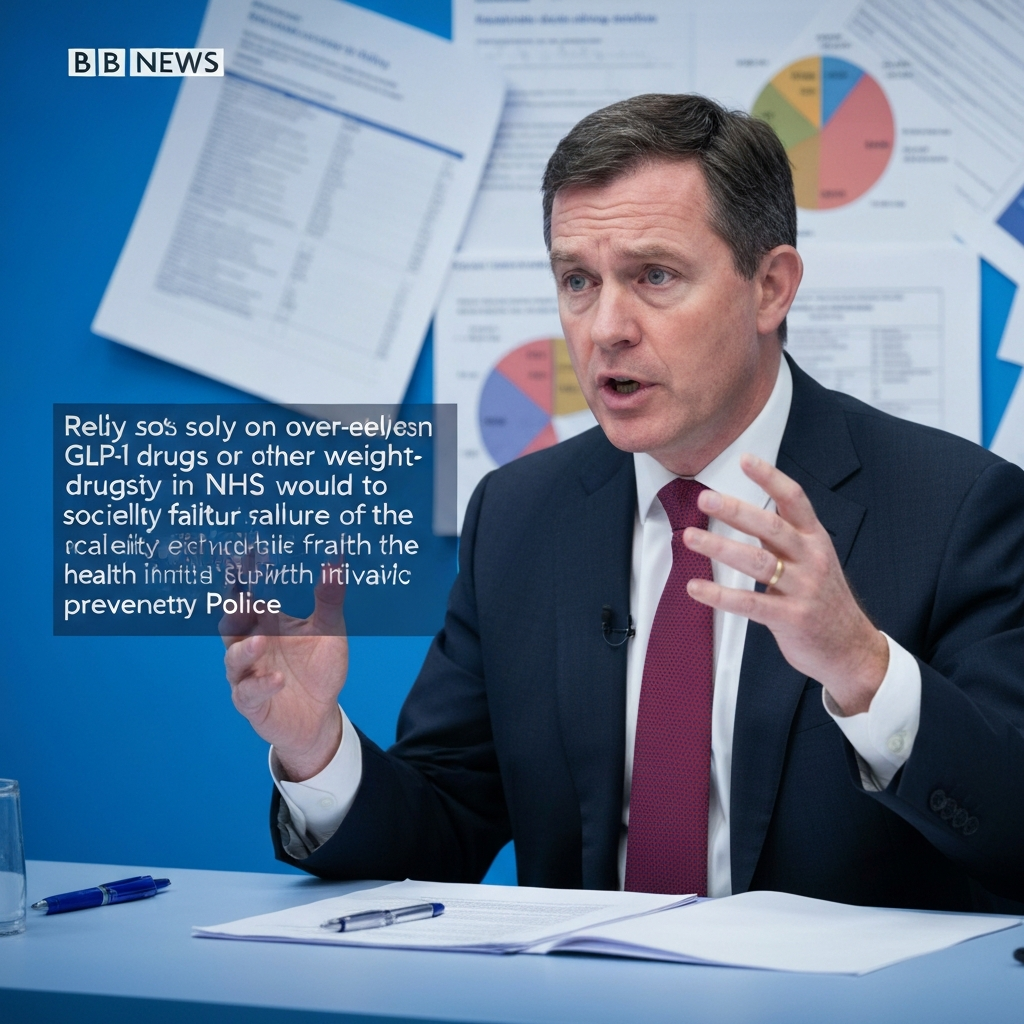
England’s Chief Medical Officer, Prof. Chris Whitty, has warned that relying on weight-loss drugs as the main response to rising obesity rates would amount to a “societal failure,” arguing that medicines should be reserved for a minority of patients while governments and communities focus more heavily on prevention.
The comments, reported by BBC News, come amid growing global enthusiasm for anti-obesity medications such as GLP-1 drugs, which have transformed treatment options for some patients living with obesity and related conditions. But Whitty’s intervention highlights a widening debate in public health: whether the future of obesity policy should center on pharmaceutical treatment, or on changing the food, economic, and social environments that drive weight gain in the first place.
What Whitty Is Arguing
Whitty’s central message is not that weight-loss drugs have no role. Rather, he argues they should be targeted toward people who will benefit most, instead of becoming a substitute for meaningful public-health action. In practical terms, that means obesity medicines may help some individuals, but they cannot solve the underlying structural causes of poor diet, sedentary lifestyles, and widening health inequalities.
That view aligns with broader guidance from health authorities including the National Institute for Health and Care Excellence (NICE), which has backed the use of some obesity treatments in defined clinical circumstances, and the World Health Organization, which continues to stress prevention through healthier diets, physical activity, and systemic policy measures.
The Bigger Public-Health Debate
Weight-loss drugs have become one of the most closely watched developments in medicine. Treatments in the GLP-1 class have shown meaningful benefits for weight reduction and, in some cases, cardiovascular risk. Their rise has fueled demand, investor excitement, and public interest across multiple countries. Coverage from outlets including Reuters and the Financial Times has documented how governments, insurers, and health systems are now wrestling with questions of access, affordability, and long-term use.
Still, public-health experts have repeatedly cautioned that obesity is not simply an individual medical problem. It is shaped by food pricing, marketing, urban design, poverty, stress, and access to care. That is why critics of a drug-first approach say medications, while valuable, risk becoming a politically easier answer than tackling unhealthy food environments or inequality.
In England, the challenge is especially acute because obesity places growing pressure on the NHS and is linked to conditions including type 2 diabetes, heart disease, and some cancers. The NHS and other public agencies have repeatedly highlighted both the health burden and the financial cost associated with obesity-related illness.
Why Prevention Still Matters
Whitty’s warning points to a familiar but unresolved reality: preventing obesity is much harder than prescribing a treatment after it develops. Prevention often requires coordinated measures that can be politically contentious, such as tighter food regulation, clearer labeling, improved school nutrition, support for active transport, and targeted interventions in lower-income communities.
Supporters of stronger prevention policies note that even highly effective drugs may need to be taken long term, potentially creating major cost pressures for public health systems. They also argue that medicines alone cannot reshape the everyday conditions that contribute to obesity at population scale.
At the same time, many clinicians caution against framing the debate as drugs versus prevention. For patients already living with severe obesity, medical treatment can be important and evidence-based. The challenge for policymakers is balancing compassion and access for those patients with broader efforts to reduce new cases in the future.
What Happens Next
The debate is likely to intensify as newer obesity medicines reach more patients and more data emerges on long-term outcomes. Governments will increasingly have to decide who should qualify for treatment, how those drugs should be funded, and what parallel prevention strategies should accompany them.
Whitty’s comments land at a moment when obesity policy is being tested by scientific progress. His argument is that modern medicines can help, but they should not become an excuse to avoid harder societal choices. If obesity is driven by the environments people live in, then the lasting solution will require more than prescriptions.
Sources: BBC News; UK Government; NICE; World Health Organization; NHS Digital.