



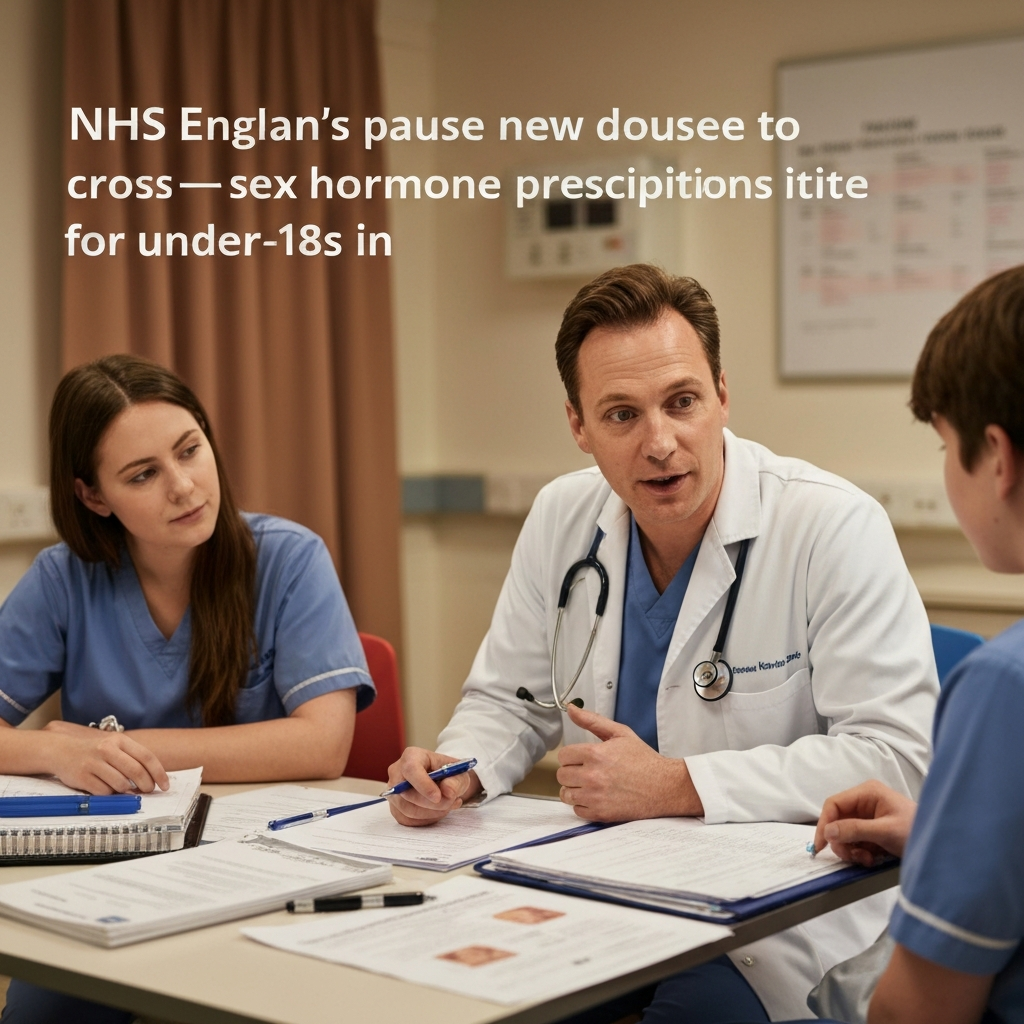
NHS England has paused new prescriptions of cross-sex hormones for patients under 18, marking a significant development in the ongoing debate over youth gender care in the United Kingdom. According to the BBC, the health service said that young people who are already receiving the drugs will continue treatment, while new prescribing is halted under the updated policy.
This decision lands at the intersection of medicine, ethics, public policy, and youth mental health. It also reflects a broader shift in how health authorities in several countries are approaching treatment pathways for children and teenagers experiencing gender dysphoria.
What NHS England Announced
BBC News reported that NHS England’s move specifically affects new prescriptions of cross-sex hormones for under-18s, while protecting continuity of care for existing patients. That distinction is important: the policy does not amount to an immediate blanket stop for all current youth patients, but it does tighten access for those who have not yet begun treatment.
The decision follows years of heightened scrutiny over evidence standards, safeguarding, informed consent, and long-term outcomes for adolescents receiving medical interventions related to gender transition.
Why This Matters in the Wider Health Debate
This is fundamentally a health story because it centers on clinical prescribing, youth treatment standards, and the role of a national health system in weighing benefits and risks. The issue has become increasingly prominent as governments, medical bodies, and independent reviews revisit how best to care for minors presenting with gender-related distress.
In England, the policy shift comes after the highly influential Cass Review, an independent examination of gender identity services for children and young people. The review called for a more cautious, evidence-led approach and raised concerns about the quality of research underpinning some medical interventions for minors.
The NHS England position reflects that broader trend: slowing or limiting treatment pathways until stronger clinical evidence and safeguards are in place.
International Context: A Global Reassessment
England is not alone in re-evaluating pediatric gender medicine. In recent years, several European health authorities have moved toward tighter restrictions or more conservative standards for minors.
For example, Sweden’s National Board of Health and Welfare has taken a more restrictive stance on hormonal interventions for young people outside carefully controlled settings, citing uncertainty around the evidence base and the need to prioritize mental health support and comprehensive assessment. Finland has similarly emphasized psychotherapy and cautious individualized evaluation before medical intervention.
These shifts suggest that the conversation is no longer confined to culture-war politics. Increasingly, it is being framed by public health systems as a question of clinical evidence, patient safety, and age-appropriate care.
The Key Tension: Access vs. Evidence
The central tension in this debate is straightforward but deeply consequential. Supporters of broader access argue that timely medical intervention can reduce distress for some adolescents and improve quality of life. Critics counter that the evidence for long-term benefits remains limited, while the potential physical and psychological consequences are serious enough to demand greater caution.
That tension has placed healthcare providers in a difficult position. On one hand, they are under pressure to ensure vulnerable young people are not abandoned. On the other, they must avoid normalizing treatments whose long-term impact is still being actively debated in the medical literature.
NHS England’s latest move appears to signal that, for now, uncertainty in the evidence base outweighs the case for expanding new prescribing among minors.
What Comes Next
The practical effects of the decision will likely be felt by families seeking treatment, clinicians navigating revised guidelines, and advocacy groups on all sides of the issue. It may also intensify calls for expanded mental health services, better diagnostic pathways, and additional longitudinal research into outcomes for young people with gender dysphoria.
More broadly, the announcement is a reminder that major health systems are increasingly trying to separate medical policy from ideology by asking a narrower question: what does the best available evidence support for children and teenagers right now?
As this debate continues, NHS England’s policy is likely to serve as a benchmark in international discussions over youth gender medicine, especially in countries reconsidering how to balance compassion, autonomy, safeguarding, and scientific rigor.
Sources
BBC News: NHS England pauses new prescriptions of cross-sex hormones for under-18s
The Cass Review
NHS England
Sweden’s National Board of Health and Welfare