



New Mexico’s physician shortage is no longer an abstract workforce problem — it is a daily reality for patients facing delayed appointments, long travel times and gaps in specialty care. Nearly every county in the state is designated a health professional shortage area, and lawmakers this year responded with a package of measures aimed at recruiting and retaining more clinicians.
The original Straight Arrow News report focused on the state’s worsening shortage and the legislative fixes approved this session. That framing places this story squarely in Health, even though it also overlaps with public policy. The core issue is access to medical care: fewer doctors, more burnout, and growing pressure on both rural and urban hospitals.
Why the shortage matters now
A New Mexico Legislative Finance Committee report found that 32 of the state’s 33 counties are facing health professional shortages. Projections cited in coverage from the Albuquerque Journal indicate the state could be short more than 2,100 doctors by 2030.
That shortage has practical consequences. Patients wait longer for preventive screenings and specialist referrals. Rural residents can end up in what providers describe as “medical islands,” where basic care is difficult to access. Doctors who remain in the system shoulder heavier caseloads, increasing burnout and accelerating retirements — a cycle that further weakens the workforce.
What lawmakers changed
State officials and lawmakers approved several responses during the latest legislative session:
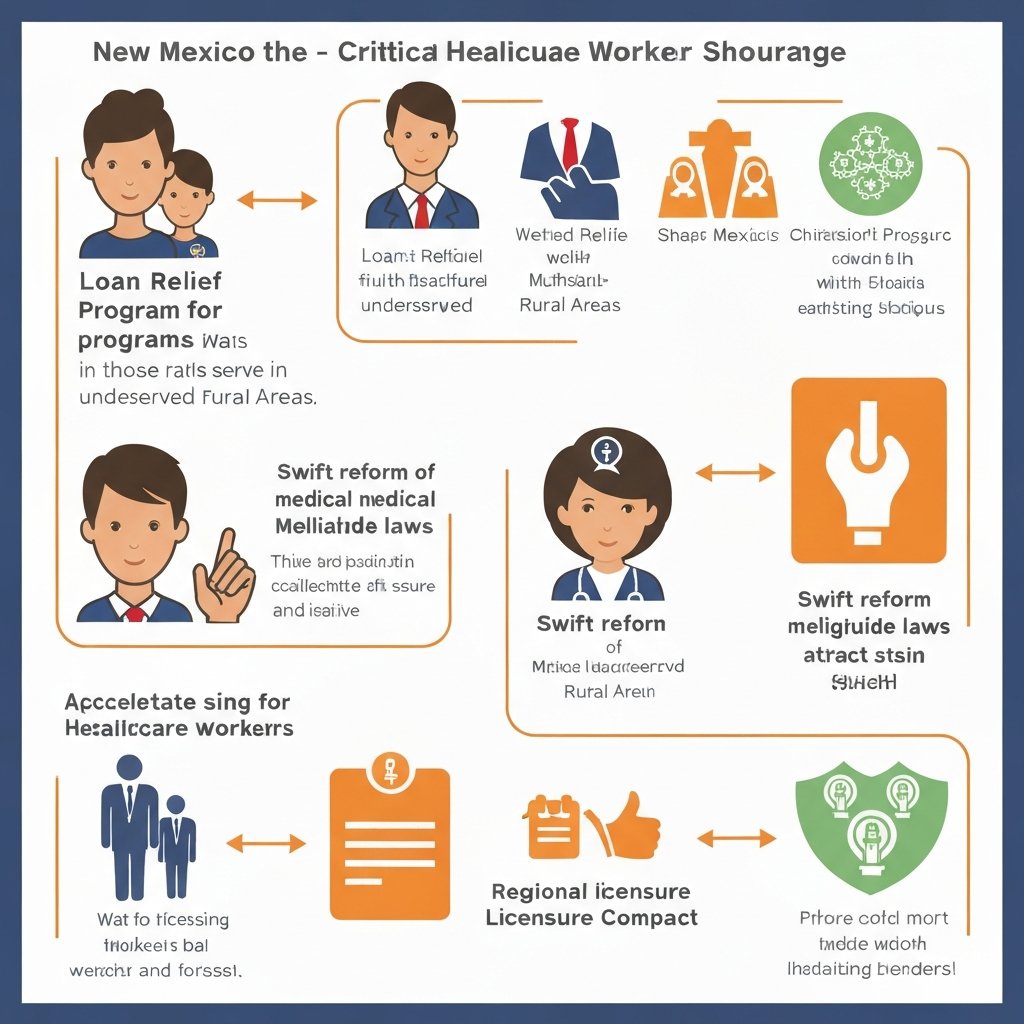
- Loan repayment expansion: HB 66 expands the Health Professional Loan Repayment Fund, allowing qualifying physicians to receive up to $300,000 in student loan repayment if they remain in New Mexico for four years.
- Malpractice changes: HB 99 creates tiered caps on punitive damages in medical malpractice cases, a change supporters argue could make the state more attractive to physicians concerned about liability exposure.
- Licensure compacts: SB 1 brings New Mexico into physician licensure compacts used by dozens of other states, potentially making it easier for doctors to begin practicing more quickly.
Gov. Michelle Lujan Grisham’s office also highlighted broader health workforce investments, including support for medical education and residency pipelines, in a statement on the session’s health-related bills: Governor signs medical malpractice reform, other health care bills into law.
The bigger national backdrop
New Mexico’s struggle fits into a broader national trend. The Association of American Medical Colleges has repeatedly warned that the United States faces a substantial physician shortage over the next decade, driven by an aging population, uneven provider distribution and physician retirements. Rural communities are especially vulnerable because they often have trouble attracting new graduates, even when overall training capacity increases.
At the same time, workforce shortages now extend beyond physicians. The Health Resources and Services Administration tracks shortages in primary care, mental health and dental care across the country, underscoring that the problem is not isolated to one state or one specialty.
Analysis: legislation may help, but it is not a quick fix
The latest New Mexico laws could improve recruitment at the margins, especially for newly trained physicians carrying large student debt or for doctors discouraged by administrative and liability concerns. Joining licensure compacts is also a practical modernization step; when professionals relocate, faster licensing can remove one avoidable barrier.
Still, no single bill can solve a shortage years in the making. Physician supply depends on training pipelines, residency slots, hospital finances, housing availability, spousal employment opportunities and whether clinicians believe they can build a sustainable life in a community. Rural areas face the steepest challenge because recruiting providers often requires more than salary incentives alone.
There is also likely to be continued debate over malpractice reform. Supporters say predictable liability rules can help retain doctors and stabilize health systems. Critics argue damage caps may make it harder for harmed patients to obtain full justice. That tension is not unique to New Mexico; it is part of a recurring national debate over how to balance patient protections with provider recruitment.
What to watch next
The most important question is whether the state’s changes produce measurable gains over the next one to three years. Signs of progress would include more physicians applying for jobs in New Mexico, stronger rural residency placement, shorter appointment wait times and less turnover among existing providers.
For now, New Mexico’s latest moves reflect an urgent reality: when a health care workforce shrinks too far, the effects show up everywhere — in emergency rooms, in delayed diagnoses, in physician burnout and in the everyday difficulty of simply finding a doctor.
Sources: Straight Arrow News; New Mexico Legislative Finance Committee; Office of the Governor of New Mexico; AAMC; HRSA; Albuquerque Journal.