



Wildfires surge across Georgia and Florida as drought deepens
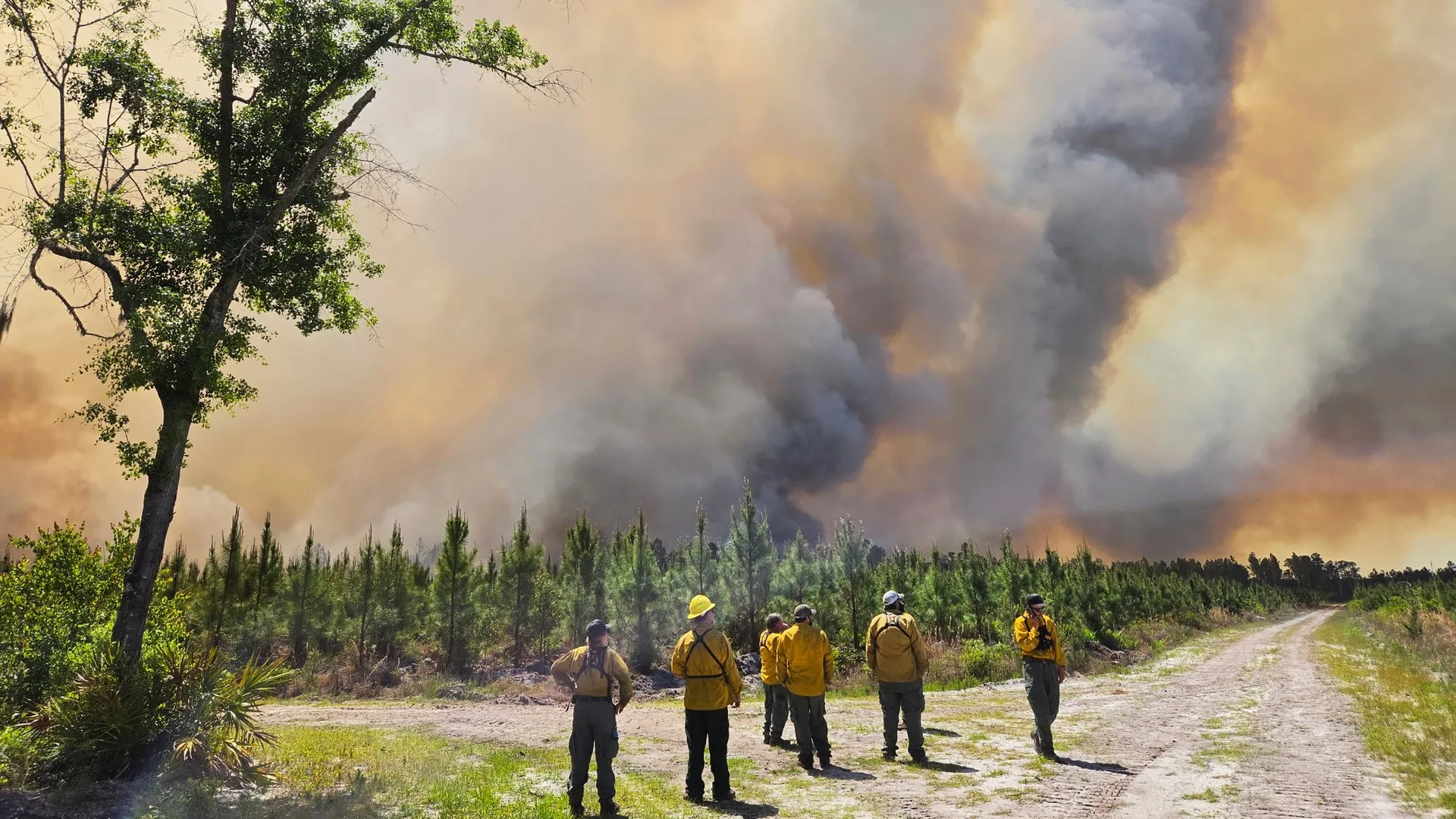
Fast-moving wildfires in southern Georgia and northern Florida have destroyed homes, triggered evacuations and sent smoke far beyond the burn zones, as officials warn that persistent drought and windy conditions are creating one of the most dangerous fire seasons the region has seen in years.
According to the Associated Press and reporting aggregated by Straight Arrow News, the most intense blazes have hit Brantley and Clinch counties in Georgia, where flames spread rapidly through dry vegetation and threatened rural communities with little warning. Georgia Gov. Brian Kemp declared a state of emergency across a large portion of the state as fire lines continued shifting.
In Florida, state fire tracking has shown more than 100 active fires at various points, with many concentrated in the northern part of the state. The Florida Forest Service wildfire dashboard has documented widespread fire activity as crews work to contain new starts and prevent additional spread.
Why these fires are spreading so aggressively
The scientific backdrop to this story is straightforward but alarming: prolonged drought, low humidity, gusty winds and a large supply of dry vegetation create prime wildfire conditions. In southern Georgia, officials imposed burn restrictions as soils and forest fuels became exceptionally dry. The Georgia Forestry Commission said conditions had become severe enough that fires could ignite easily and move with little resistance.
This pattern matches what fire scientists have long observed. The National Interagency Fire Center notes that wildfire growth accelerates when dry fuels, wind and heat combine, especially in areas where rainfall deficits have built up over time. Even regions not typically associated with the biggest U.S. wildfire headlines can face major outbreaks when those ingredients align.
The broader climate context matters, too. The U.S. Drought Monitor and Drought.gov have repeatedly shown expanding drought pressure in parts of the Southeast. While no single fire season can be attributed to one cause alone, experts at agencies including NOAA have emphasized that warming temperatures increase evaporation, dry out fuels faster and raise the odds of periods favorable to extreme fire behavior.
Smoke may become the bigger public-health threat
Even for people far from the flames, wildfire smoke can become the most immediate danger. Reports indicate smoke from the Georgia fires has drifted into larger metro areas, degrading air quality and prompting officials to urge residents to reduce outdoor activity.
The EPA’s AirNow platform warns that wildfire smoke can be hazardous not only for people with asthma, heart disease or other existing conditions, but also for otherwise healthy residents when fine particle pollution rises enough. That is especially relevant when smoke lingers over communities for days instead of hours.
One reason this matters is that smoke impacts often scale faster than the fire perimeter itself. A blaze burning in a rural county can still affect air quality in distant cities if weather patterns push particulates across the region. In that sense, wildfire is no longer only a local disaster story; it becomes a multi-county, sometimes multi-state environmental event.
A regional warning sign, not just a local crisis
The latest fires in Georgia and Florida fit a broader national trend: wildfire risk is becoming more geographically diverse. Western states still dominate the conversation around catastrophic fires, but the Southeast has increasingly faced its own fire-weather challenges, particularly during dry stretches when forests, brush and timberlands become highly combustible.
The U.S. Forest Service and other land-management agencies have stressed that preparedness now requires year-round planning in many parts of the country. That includes fuel management, prescribed burning when conditions are safe, evacuation route planning and public education around burn bans and ignition risks.
What makes this moment especially troubling is that officials in both states have suggested significant rainfall may be the only real short-term relief. Until then, suppression crews remain at the mercy of shifting winds, dry ground and new spot fires started by drifting embers.
The bigger takeaway
This is not just a story about flames crossing county lines. It is a story about how drought compounds risk, how smoke extends the footprint of a disaster, and how states outside the traditional wildfire spotlight are increasingly vulnerable when weather extremes stack up. If current conditions persist, the Southeast may be forced to rethink wildfire preparedness the same way the West has over the last generation.
For residents, the practical message is simple: take evacuation orders seriously, monitor local emergency alerts, and pay close attention to air-quality guidance even if the fire itself seems far away. In modern wildfire events, danger does not always arrive as a visible wall of flame. Sometimes it arrives first as wind, haze and a sky that suddenly looks wrong.
Sources: