


Air travelers across the United States are running into unusually long airport security lines as a partial shutdown of the Department of Homeland Security stretches into its fourth week, leaving the Transportation Security Administration short on staff during the start of the spring break travel rush.
The story fits squarely in Politics because the travel disruption is tied directly to a federal funding lapse, a congressional standoff over immigration enforcement, and the broader political fight between Democrats and Republicans over homeland security policy. While the visible impact is being felt in airports, the core issue is a government shutdown driven by Washington negotiations.
Shutdown politics are now hitting travelers in real time
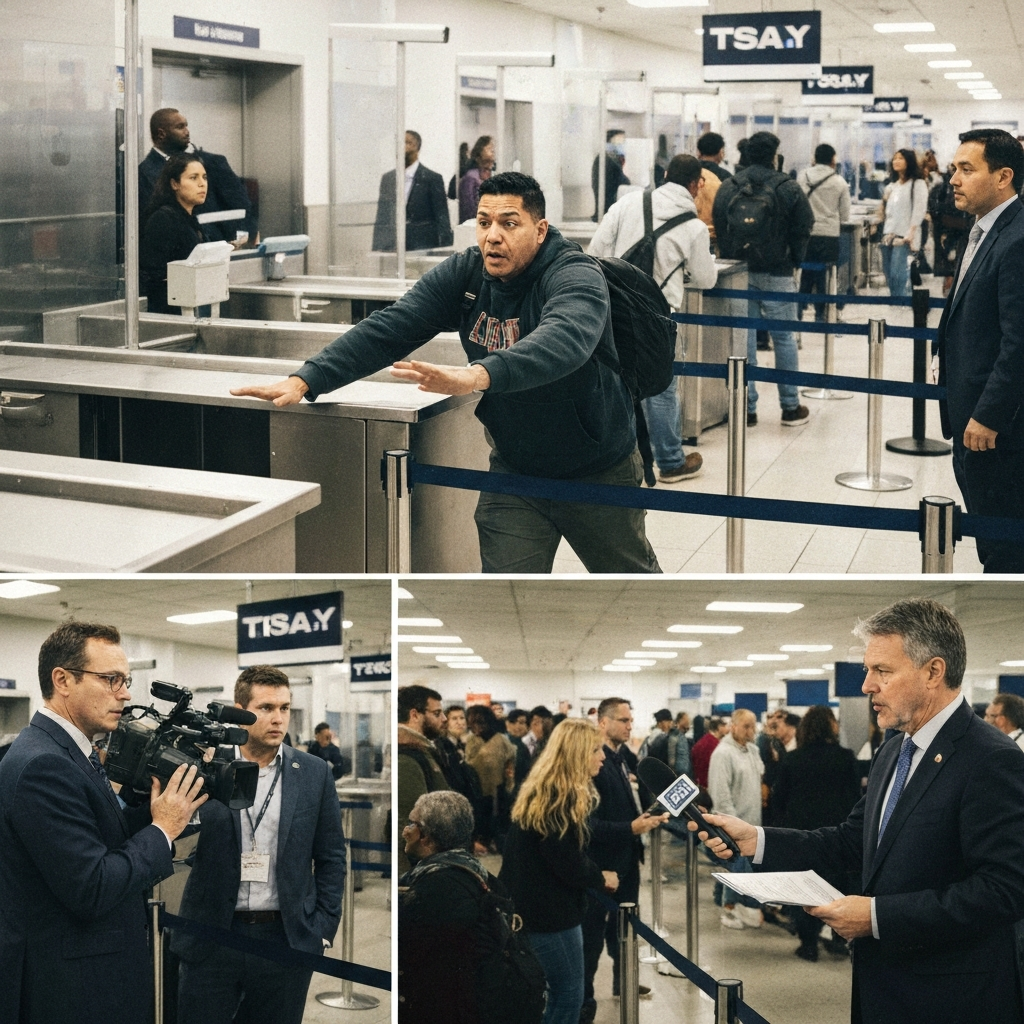
According to Straight Arrow News, travelers in Houston and New Orleans faced security waits stretching into multiple hours, with some passengers missing flights. Airports in Atlanta, Charlotte, and Houston also reported longer-than-normal TSA lines as officer shortages worsened.
The broader context comes from the ongoing lapse in DHS funding. As reported by CNN, TSA officers are classified as essential workers, meaning they must continue reporting to work even when Congress has not approved funding. But missing paychecks and financial strain can still reduce staffing as more workers call out, creating bottlenecks at checkpoints.
The Associated Press and other outlets have similarly noted that transportation disruptions are often among the most visible signs of federal shutdowns because they affect millions of travelers immediately, especially during peak travel periods.
Why this is more than an airport story
At the center of the impasse is a political battle over immigration policy and the scope of enforcement powers for agencies including Immigration and Customs Enforcement and Customs and Border Protection. That makes this not just a transportation inconvenience, but a live example of how Washington budget fights can spill into everyday life.
DHS officials have publicly blamed Democrats for the stalemate, while Democrats have pushed for tighter restrictions on enforcement practices. In practical terms, the result is a federal department operating without full funding while frontline workers absorb the immediate consequences.
This follows a familiar pattern in American politics: essential public services continue in reduced or strained form, but the cost is shifted onto workers and the public. For travelers, that means hours in line. For TSA staff, it means doing security work without full or timely pay. For elected officials, it becomes a messaging war over who is responsible.
Latest political developments around shutdowns and funding fights
The airport delays also land at a time when government funding brinkmanship remains a recurring feature of national politics. Recent congressional debates over appropriations, border security, and executive authority have repeatedly raised the risk of agency-level disruptions. Coverage from Reuters and NBC News has highlighted how partisan divisions over immigration and domestic security have become especially hard to resolve because they are tied to both policy and campaign messaging.
That broader dynamic matters. Shutdowns are no longer just budget events; they are political leverage points. Each side tries to frame the damage as proof of the other side’s extremism or unwillingness to compromise. In this case, the effects are especially visible because spring break is a major travel window, making airport congestion a powerful symbol in the political argument.
What to watch next
If lawmakers fail to break the impasse quickly, delays could spread further as heavier seasonal travel volume collides with staffing shortages. Missed pay periods can intensify absenteeism, and once airport lines become unpredictable, disruptions tend to compound as passengers arrive earlier, terminals become more crowded, and airlines must manage missed departures and rebookings.
The bigger political question is whether public frustration over these visible disruptions will pressure Congress into a compromise. Historically, shutdowns become harder to defend when their consequences move from abstract budget disputes to concrete daily problems for ordinary Americans. Long TSA lines, missed vacations, and stressed federal workers may do more to shift the politics of the shutdown than any floor speech in Washington.
For now, the latest news suggests the same conclusion: what began as a partisan standoff over homeland security funding has turned into a real-world test of how much dysfunction the public is willing to tolerate before demanding a deal.
Sources
Straight Arrow News: Spring break travelers face long wait times due to TSA shortage
CNN: Long security lines form at airports as TSA staffing shortages grow during shutdown
NBC News: Major airports grapple with hourslong security waits amid TSA staffing shortages
Associated Press
Reuters