



Category Selected: Pop Culture
The original RSS item is best categorized as Pop Culture. While it contains political references, the core of the story is entertainment-focused: Elisabeth Hasselbeck reflecting on her TV career, her return to The View, and her connection to Survivor. The article centers on celebrity media, television history, and talk-show culture rather than public policy or campaign developments.
Latest Pop Culture News: Elisabeth Hasselbeck Revives an Old TV Dynamic on The View
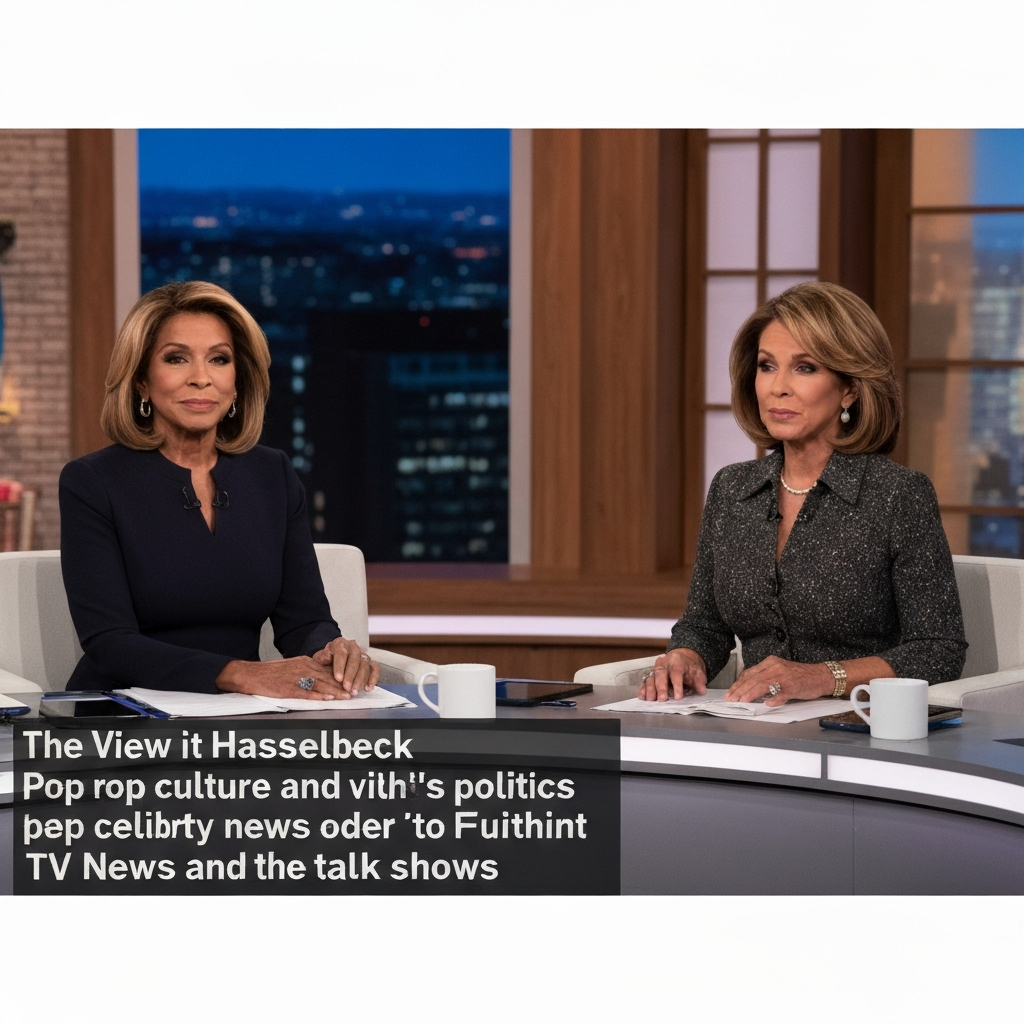
Elisabeth Hasselbeck’s return to The View has quickly become one of the more talked-about entertainment stories of the week, not only because of her nostalgia factor, but because her presence revives a style of daytime TV debate that once defined the program. In comments discussed by Entertainment Weekly, Hasselbeck said her time on Survivor served as a “great training ground” for surviving the combative, high-pressure environment of The View’s Hot Topics table.
That framing resonated because it captures exactly what made Hasselbeck such a memorable television personality during her original run from 2003 to 2013: she was never simply a host reading cues. She was a cultural lightning rod. Her appearances this week have reminded audiences how much daytime talk television once relied on ideological clashes as a form of entertainment — long before social media turned every televised disagreement into instant viral content.
According to Entertainment Weekly, Hasselbeck told Behind the Table that spending nearly 40 days in the Australian outback among dangerous wildlife prepared her for ten years of daily political and cultural arguments on ABC. The comparison was classic Hasselbeck: dramatic, self-aware, and engineered for reaction. It also underscores how reality television and daytime television have long fed each other, creating personalities whose appeal depends on conflict, resilience, and personal branding.
Her return also arrives at a moment when legacy television franchises are increasingly leaning on familiar personalities to reignite audience interest. Across the entertainment industry, studios and networks have spent the last several years mining established brands, reunions, and recognizable faces in an attempt to cut through a fragmented media landscape. The View, one of the most durable shows in daytime TV, knows the value of this strategy. Bringing Hasselbeck back instantly generated headlines, social media discourse, and renewed conversation about the show’s most combustible eras.
Coverage from Entertainment Weekly’s reporting on her reunion with Joy Behar emphasized that audiences were especially interested in whether old tensions would resurface. They did not fully revisit their earlier clashes, but the suspense itself became part of the attraction. In modern pop culture, unresolved television history can be almost as marketable as a new development.
At the same time, Hasselbeck’s guest-hosting stint illustrates how blurred the line has become between entertainment and political identity. While this remains a pop culture story, her on-air exchanges touched on voting, COVID-era masking symbolism, and immigration-related imagery, all issues that draw strong reactions well beyond television fandom. Entertainment Weekly also reported on backlash tied to one of her more controversial comparisons on-air, showing that the formula that made her famous still works: provoke, polarize, and dominate the conversation.
What makes this noteworthy in 2026 is that pop culture is no longer separate from civic discourse; it often functions as the gateway to it. Programs like The View are not simply entertainment platforms but cultural battlegrounds where celebrity, politics, and media strategy merge. Hasselbeck’s reappearance demonstrates that audiences still respond to personalities who embody ideological friction, even when they disagree with them.
There is also a broader television-industry angle here. Daytime talk shows have faced growing competition from podcasts, YouTube commentary, TikTok clips, and personality-driven streaming content. To remain relevant, traditional shows increasingly depend on viral moments and emotionally charged exchanges. Hasselbeck, a veteran of both reality TV and talk TV, fits that demand perfectly. Her comments about Survivor and her refusal to return to the competition series, also detailed by Entertainment Weekly, help tie together multiple eras of unscripted television in one news cycle.
The deeper significance of this story is not just that a former cohost came back and made noise. It is that her return highlights a durable truth about modern entertainment: audiences still crave recognizable figures, unresolved history, and televised conflict that feels personal. Hasselbeck remains relevant not because she represents consensus, but because she represents friction — and friction remains one of pop culture’s most valuable currencies.
For ABC and The View, that likely means the week was a success. For viewers, it was a reminder of how certain TV personalities can instantly transport a show back into the center of the cultural conversation. And for the broader entertainment industry, it was further proof that in an age of endless content, controversy still cuts through.
Sources
- Entertainment Weekly – Elisabeth Hasselbeck compares “The View” to enduring the world’s ‘deadliest snakes’ on “Survivor”
- Entertainment Weekly – Joy Behar and Elisabeth Hasselbeck reunite on The View
- Entertainment Weekly – Coverage of backlash over Hasselbeck’s on-air comparison
- Entertainment Weekly – Why Elisabeth Hasselbeck says she will never return to Survivor