




As grandparents, you want all of your relatives to feel happy, loved and connected in your company. Unfortunately, that doesn’t always happen.
Sometimes, unintentional or even well-meaning comments from grandma and grandpa can “create an environment where grandkids feel uncomfortable or insecure,” Ann-Louise Lockhart, a pediatric psychologist and president of A New Day Pediatric Psychology in San Antonio, told HuffPost.
That’s why it’s important to be more mindful about how we communicate with our grandkids not just during this time but all year round.
“It can be hard to change the way you say things but it’s important to be intentional with your words, and be aware of how much words can impact the way your grandkids think and feel about themselves and their relationship with you,” Lockhart said.
We asked Lockhart and other experts which common phrases are best avoided and what to say instead.
One note before we dive in though: If you’ve used any of the below phrases before — or happen to slip up in the future — try not to worry too much or beat yourself up over it.
“It’s never too late to start being more mindful of how you approach interactions with your grandchildren,” said Andrea Dorn, a psychotherapist and author of the “Mindful Steps” children’s book series.
1. “Don’t tell your parents … ”
Maybe it’s sneaking your grandkids an extra cookie (or two) behind their parents’ back, or letting them stay up past their bedtime and whispering, “It’ll be our little secret.” Any time you’re encouraging your grandkids to keep something from their parents it can be harmful, Atlanta clinical psychologist Zainab Delawalla told HuffPost.
“It undercuts parental authority, which can have long-standing consequences,” she said. “Furthermore, it models for kids that they might find themselves in situations where it’s in their ‘best interest’ not to tell their parents. This can be especially dangerous if a child is being groomed by a predator or feels bad about themselves for getting bullied.”
Instead, you want to reinforce the importance of being honest with their parents — no matter what.
“Grandparents can find other ways of doting on their grandchildren without crossing the boundaries their parents have put in place,” Delawalla said.
2. “You’re getting so big! Have you put on weight?”
Comments about a child’s body or weight are a “huge no,” Lockhart said, as they can contribute to body image and self-esteem issues.
“As responsible adults, it’s our duty to support and encourage children to be confident in their own skin,” she said. “Let’s avoid making any comments that could potentially harm their self-worth and lead to insecurity. I hear about it constantly in my practice from young children through adults. Harsh comments from grandparents like this are remembered and replayed over and over again.”
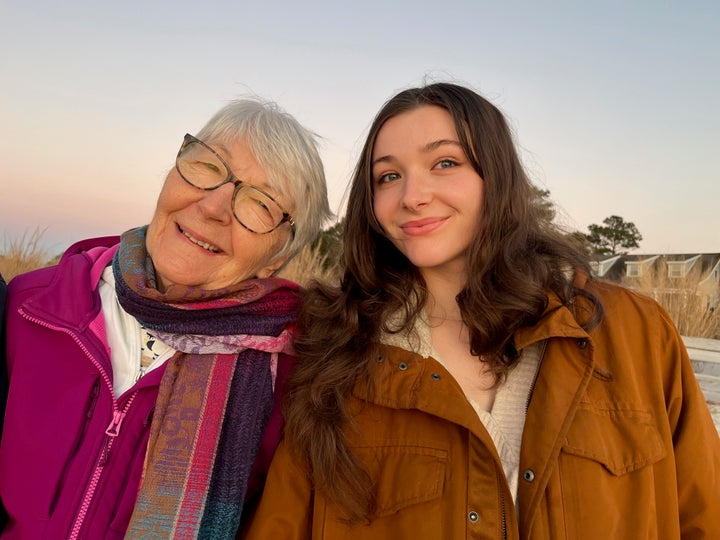
Therapists explain why grandparents should consider avoiding this kind of language when spending time with their grandkids.
Dorn also told HuffPost that any remarks or comparisons about physical appearance can be problematic. This includes things like: “Have you lost weight?” or “Wow, you’re so much taller than your brother now!”
“The issue with comments about physical appearance or comparisons to others is that they place an increased focus on the importance of external features over internal traits,” she said.
Instead, she suggested saying something like: “It’s wonderful to see you again! I’ve missed spending time with you. How have you been?” Open-ended questions about your grandkids’ current interests, activities or hobbies are great, too .
“Being genuinely interested in who kids are on the inside helps them to feel seen and heard, and sends the message that each person can be valued just as they are right now and that people are more than just how they look or what they wear,” Dorn said.
3. “Wow, you ate more than I did!”
Any comments about your grandkids’ food intake — “You eat so fast,” “You’re a member of the clean plate club,” “Looks like you haven’t touched a thing on your plate” — are best kept to yourself.
“Learning about food and hunger cues is an important developmental step in childhood,” Dorn said. “Comments about ‘good’ and ‘bad’ eating habits can influence children to adjust their eating behavior in reaction to another person’s comments or perspective, rather than following the signals their body is sending them. It may also trigger feelings of shame or confusion in the moment or over time.”
It’s really not necessary to comment on your grandkid’s plate or their eating habits. But if you’re going to say something, Dorn recommended focusing on the importance of listening to one’s body.
“You can also model this practice by listening to your own body, and stopping when you feel full and eating when you feel hungry,” she said. “Modeling good eating habits is more important than any comments we can make.”
4. “You’re so spoiled.”
When you see your grandchild acting ungratefully while opening a mountain of presents or throwing a fit because they didn’t get their way, you might be inclined to make a comment about how spoiled they are.
If this kind of behavior is happening pretty consistently, it probably has less to do with the kid and more to do with the way they’ve been parented.
As Ryan Howes, a clinical psychologist from Pasadena, California, told HuffPost: “If they are acting entitled and ungrateful, this may be a behavior they learned or saw modeled for them, maybe even something that was reinforced by their parents. So giving them all the blame isn’t fair. Suck it up or talk with the parents, but keep the judgment to yourself.”
5. “You better come over here and give me a hug or a kiss!”
As a grandparent, it’s natural to want to connect with your grandchildren in this way, especially when you’re so excited to see them. However, many kids may not feel comfortable giving hugs and kisses on demand, and it’s important for the adults in their lives to respect this.
“While this phrase is likely filled with love and a completely normal desire to foster closeness and connection with a child, it can also unintentionally take away a child’s right to autonomy and pressure them to abandon and second-guess their body boundaries,” Dorn said. “This can send confusing messages about consent.”
In order to respect your grandkids’ boundaries, you could instead phrase this as a question: “I’d love to give you a hug. Is that OK?”
But if they say “no,” accept their answer and move on.
“Make sure not to push further or use guilt with a comment like, ‘Please, just one? I’m your grandma/grandpa!’” Dorn said. “A helpful thing to do instead is keep the mood light and say something like, ‘OK! I love you so much and can’t wait to hear all about what you’ve been up to.’”
“It’s never too late to start being more mindful of how you approach interactions with your grandchildren.”